プログラム
14:00-14:10 趣旨説明
14:10-16:10 事例報告(各20分)
・対話から始まる環境づくり ― 学校づくりにおける共創とシナジー ―(堀部篤樹)
・高度経済成長期における大手私鉄の沿線外開発 ― 索道開発の比較からみる名鉄グループによる開発の特異性 ―(濵田修至)
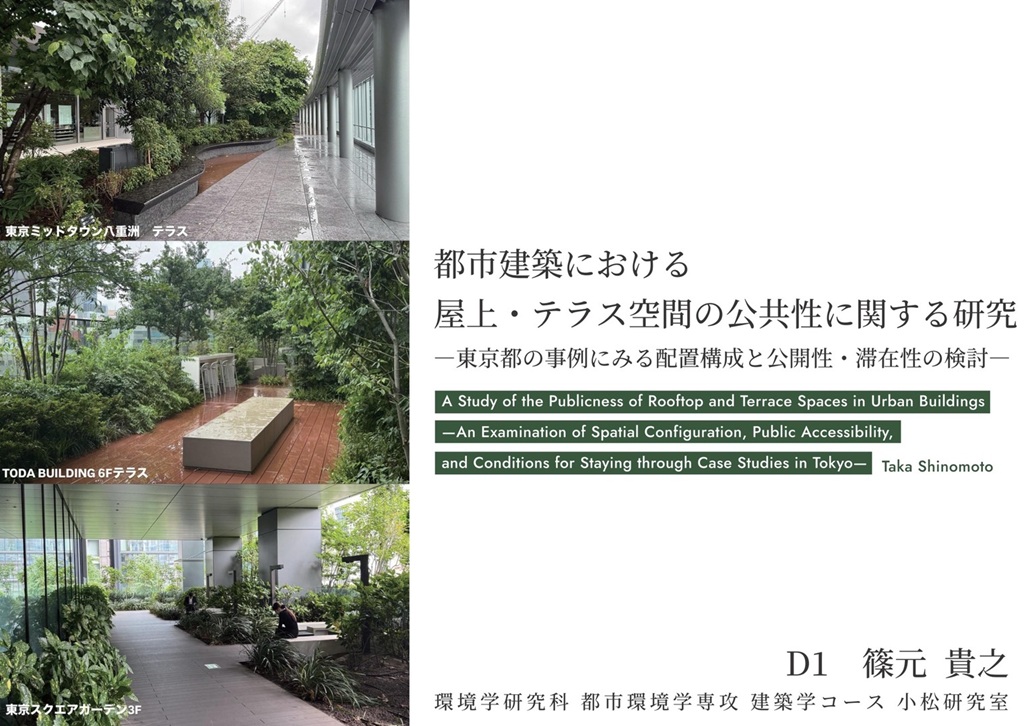
・つくられた屋上から、使われる環境へ ― 設計意図・運用・利用実態のシナジー ―(篠元貴之)
・地域資源と社会的実践のシナジーによる都市再生(榊原節子)
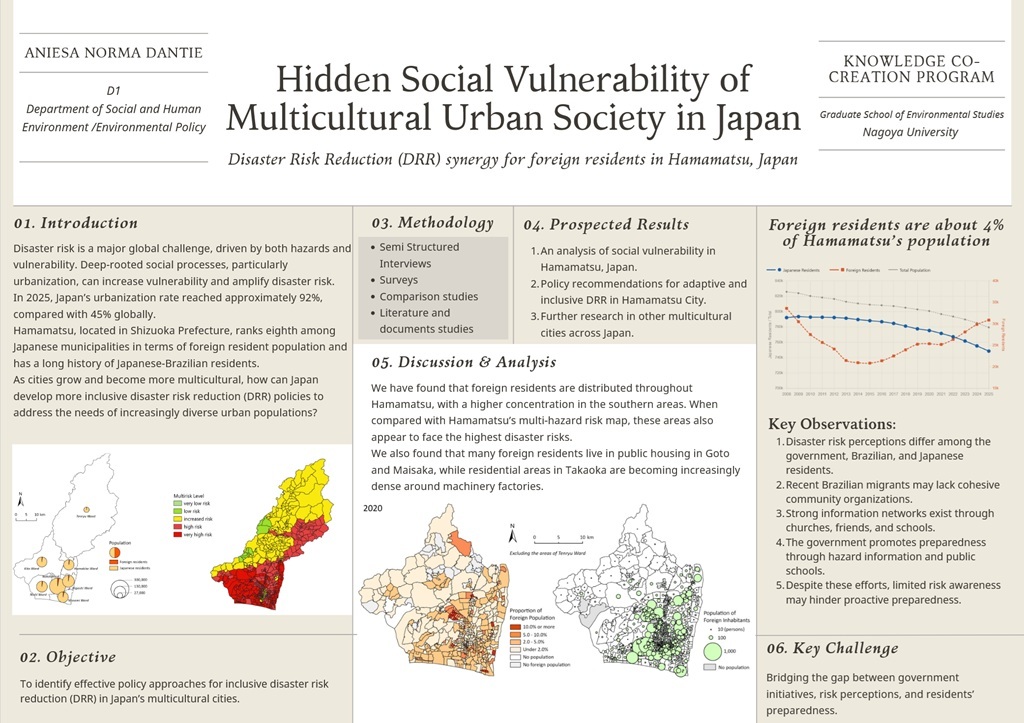
・The Role of Social Networks among Foreign Residents in Hamamatsu, Japan, in Enhancing Urban Resilience and Strengthening Disaster Risk Reduction Synergy(Aniesa Norma Dantie)
・産官学連携により構築された地域循環共生圏の形成過程におけるシナジー(宮澤賢治)
16:10-16:20 休憩
16:20-17:00 パネルディスカッション(参加者との質疑応答を含む)
第6回公開コロキウム
日時
2026年11月5日(木)17:15~18:30(オンライン)
発表者
DANTIE Aniesa Norma
タイトル
Hidden Social Vulnerability of Multicultural Urban Society in Japan
要旨
Disaster risk is driven by both hazards and social vulnerability, but disaster management still focuses mostly on hazards. This gap matters most in multicultural cities. Japan now has over 4 million foreign residents. Hamamatsu, located in Shizuoka Prefecture (8th largest foreign population among Japan’s prefectures), has foreign residents making up about 4% of its population, many living in high-risk southern wards. The city provides multilingual information and Bosai leader training, yet contact with trained foreign leaders faded, and preliminary interviews with Brazilian residents show different disaster risk perceptions and low preparedness. This study asks how to build inclusive disaster risk reduction (DRR). Using interviews, GIS gap mapping, and social network analysis, it will produce an inclusive DRR model and policy briefs. Inclusion should mean adapting DRR institutions to a multicultural population, not only asking foreign residents to adapt.


 名古屋大学大学院 環境学研究科